Ravine/stream of the goat
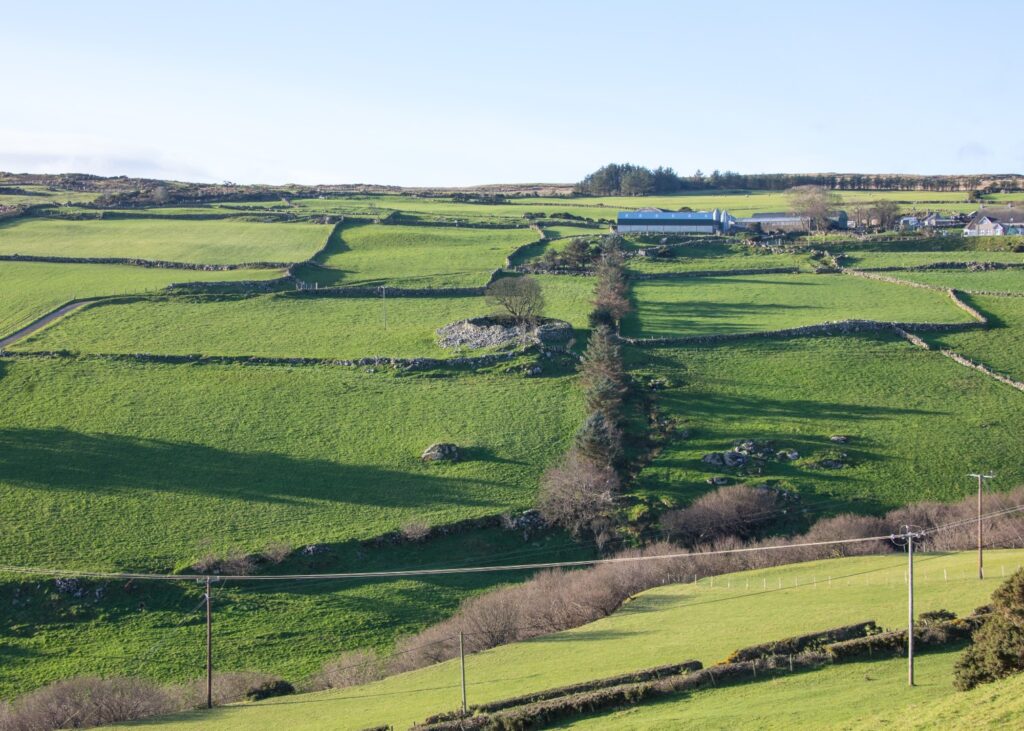
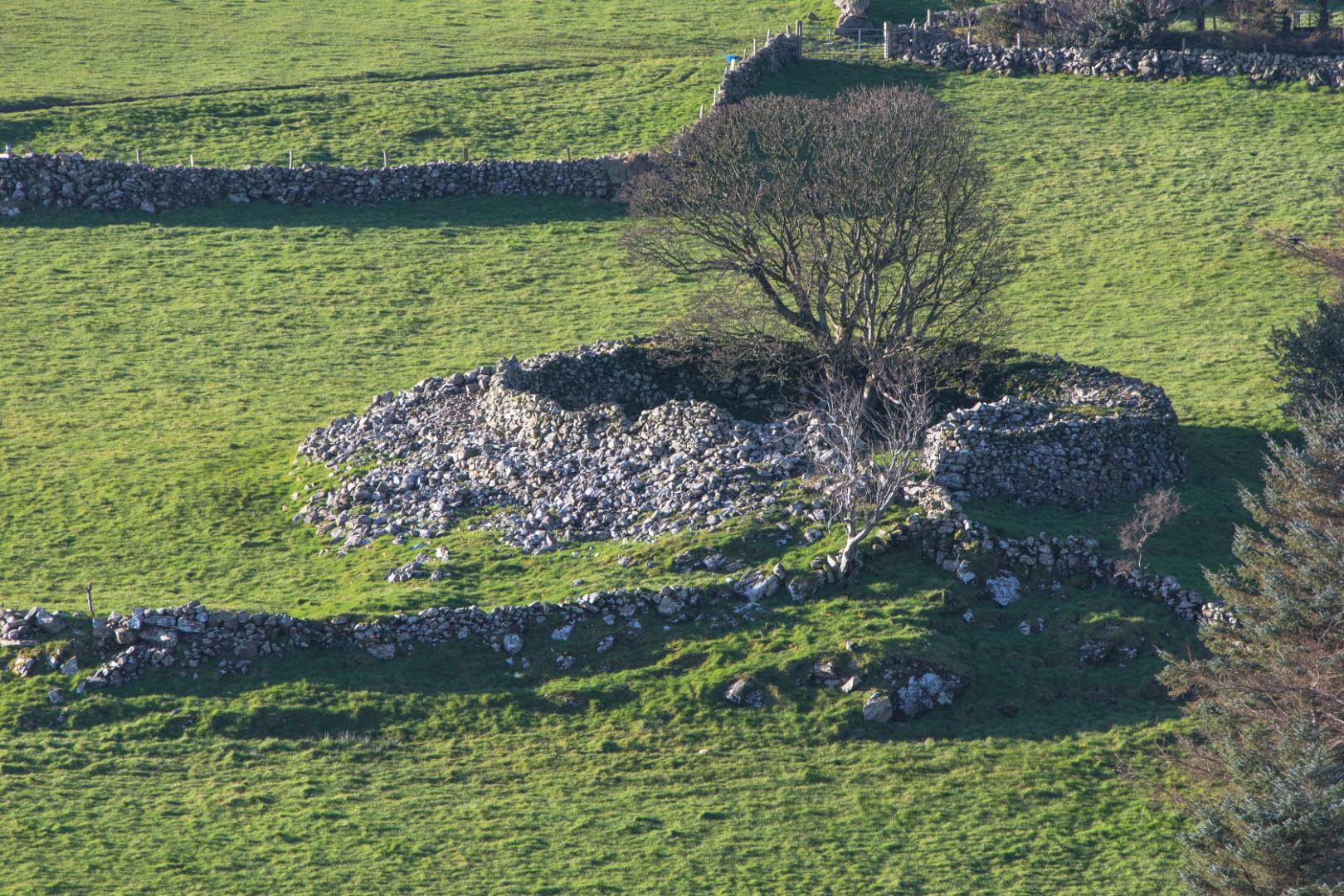
Altagore cashel is plainly visible from Dan Nancy’s Brae up the Torr Road. It is west of the coastal road from Cushendun to Ballycastle, about 2.0 km north of Cushendun. There is estimated to be the remains of over 40,000 ring forts in Ireland, the cashel being the stone equivalent of the earthen rath. Ringforts were built by the Celts probably from around the fifth century AD and continued in use until sometime after 1000AD but as defensive forts certainly not beyond the arrival of the Anglo Normans (1177) with their superior motte and bailey structures often built on the site of former ringforts.
Substantial ring forts like Altagore often had passages or souterrains built into a wall and while Altagore souterrain is now blocked to stop sheep being trapped, at one time is was possible to crawl along it for several metres. Opinions vary with regard to their main use, possibly a refuge for women and children from missiles or fire if under attack, very possibly a cool store for food and other items which might be trampled by cattle brought in when cattle raids were likely. Cashels have often in the past been robbed of stone to build houses and dykes but Altagore has been well preserved thanks to the McNeill family who own the land.
Altagore was obviously built when stone/rock was more available than soil whereas a few miles away but lower down are five raths where soil is more abundant than stone. The inside diameter is approximately 16 metres, width of walls 3 metres and original height maybe 4 metres and with the entrance being quite small it would have provided defence against moderate attacks but hardly a defence against Vikings, as some have suggested. Status as a local chieftain may also have been the reason for the cashel but it is clear that the vast majority of ring forts were protective farmsteads against wild animals and bands of raiders attempting to drive off cattle. Cows not coinage were the currency for hundreds of years and other animals and items were valued as fractions of a cow’s value. Some of the Gaelic chieftains had herds of 100,000 plus.
This post is part of the What’s That? Project. Funded by The Community Arts, Culture and Heritage Fund & The Community Foundation for NI. The aim of the project is to highlight local historical sites and give people a short history of what is there. Photos by John Healy.