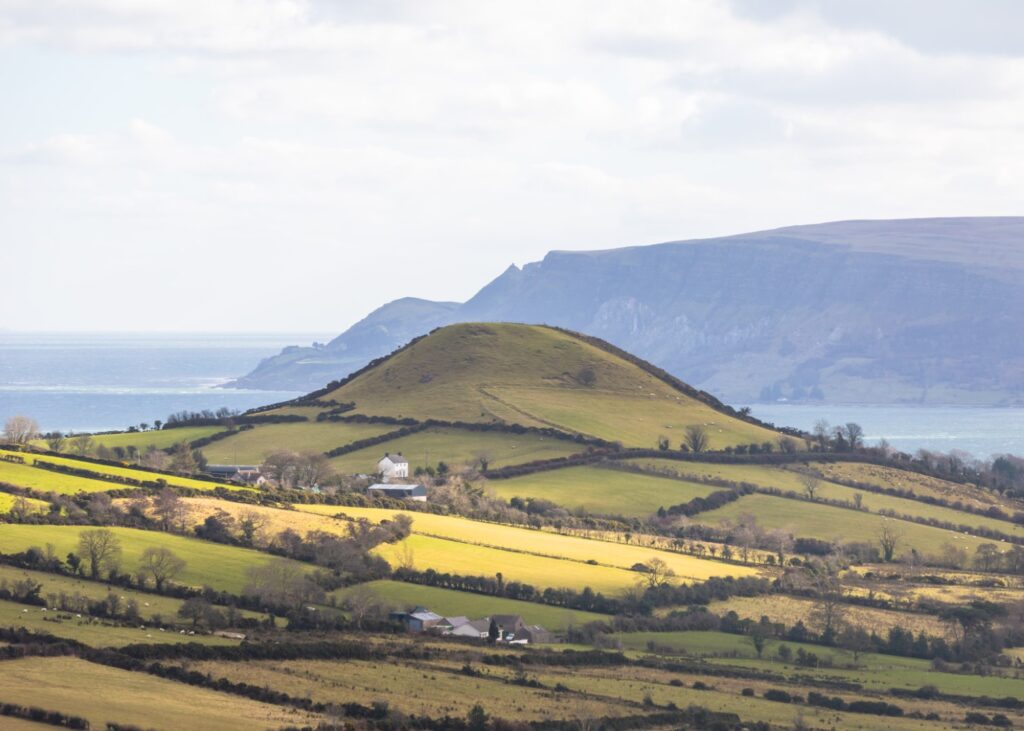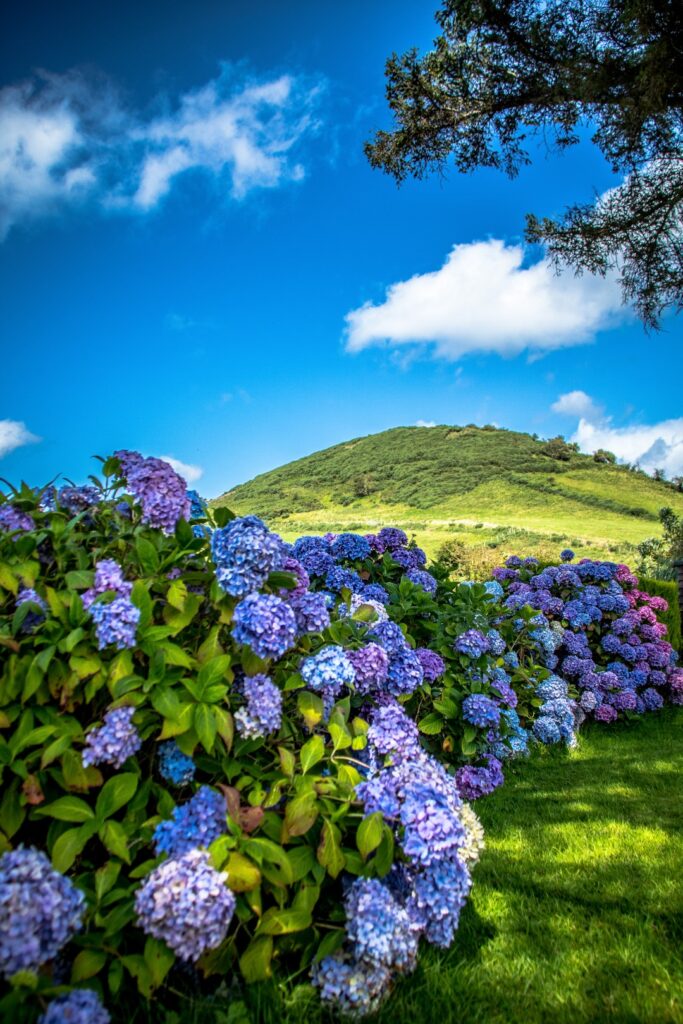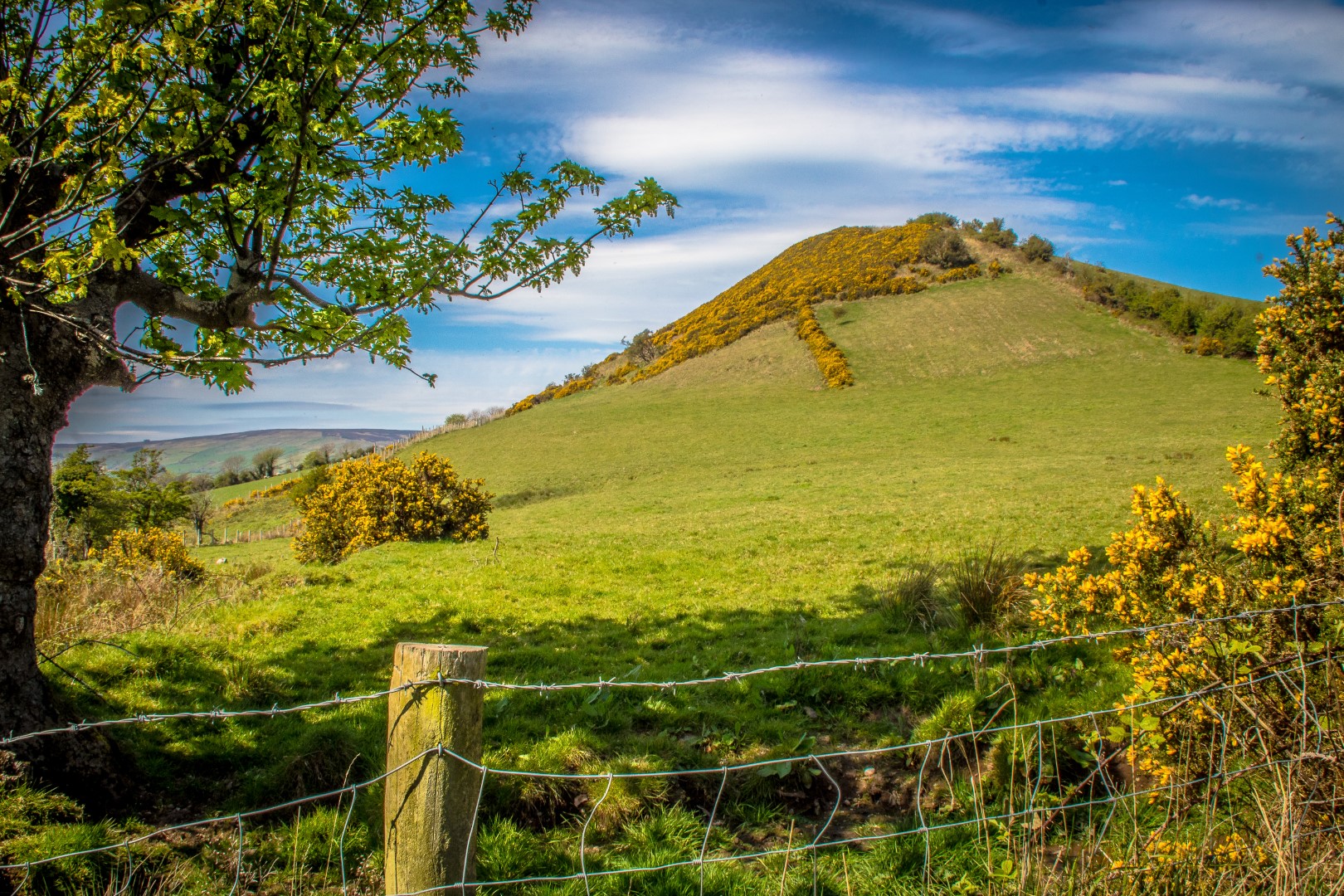
Tieveragh (hillside of the raths) is an outstanding example of a volcanic plug and is very visible from the surrounding roads. The raths, two of, are well behind Tieveragh on the other side of Glenville Road in the townland of Coshcib.
Tieveragh, Tievebulliagh and Slemish are volcanic plugs formed 60 million years ago after volcanic eruptions covered the Antrim Plateau.
The basalt of the Antrim Plateau was the result of the lava flow from these eruptions and The Giants causeway is the result of slow cooling of this lava.
There are many local fairy ‘experiences’ related to Tieveragh and it is often referred to as The Fairy Hill (Cnóc na Sí).
A prominent Glensman on being asked if he believed in fairies the reply was that it would be a brave man who would climb to the top of Tieveragh on a Halloween night. Before the arrival of television, ceilidhing and storytelling in each other’s houses was a way of life throughout rural Ireland and imagination and exaggeration offered supernatural explanations for events which had no obvious explanations at that time as in the ‘blinking’ of a milking cow or the sudden death of an animal.
The Christian Church tried many strategies to combat superstitions such as creating Christian feast days instead of pagan festivals e.g Halloweve – All Saints/All Souls. However, the most successful ploy was the adoption of ‘holy wells’ from their pagan origins.
This post is part of the What’s That? Project. Funded by The Community Arts, Culture and Heritage Fund & The Community Foundation for NI. The aim of the project is to highlight local historical sites and give people a short history of what is there. Photos by John Healy.