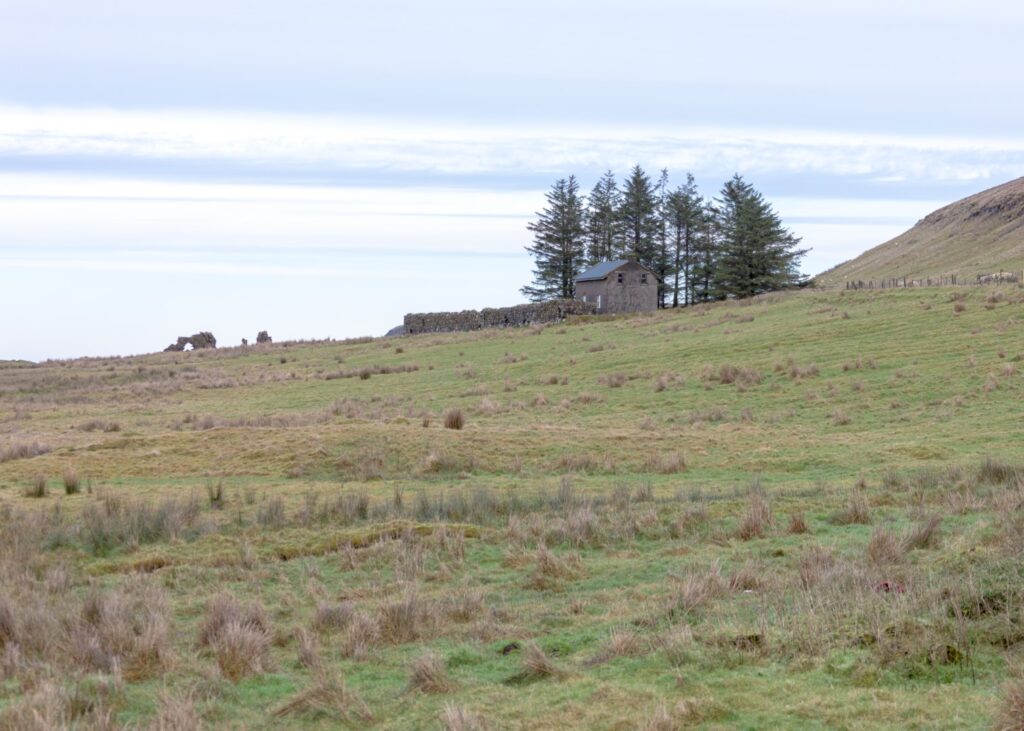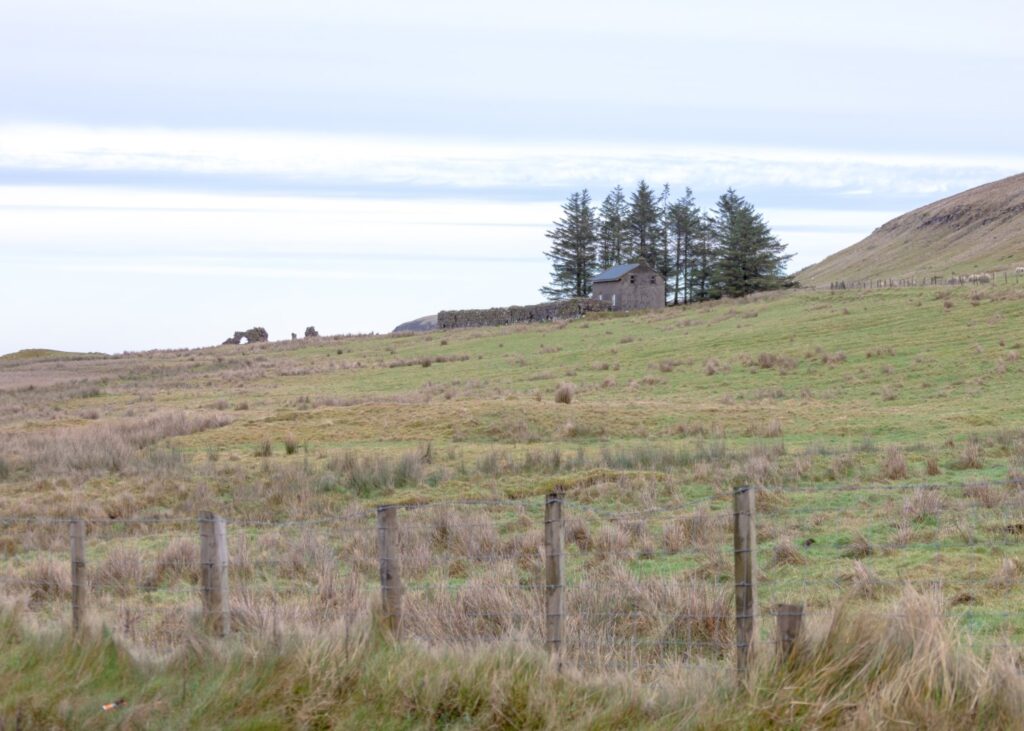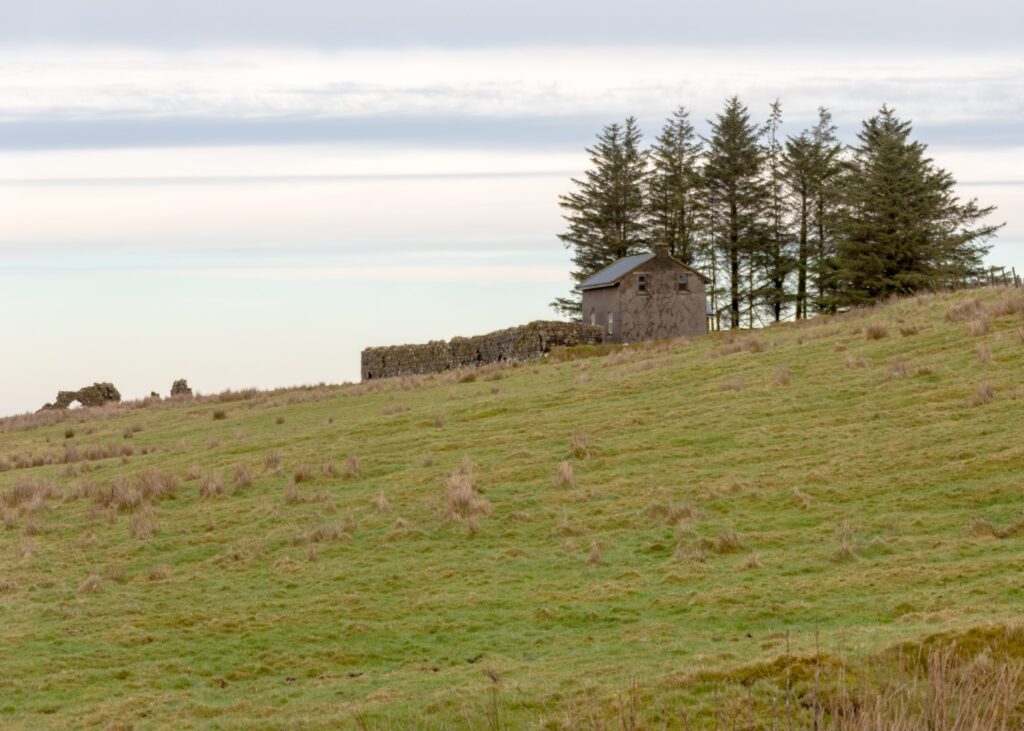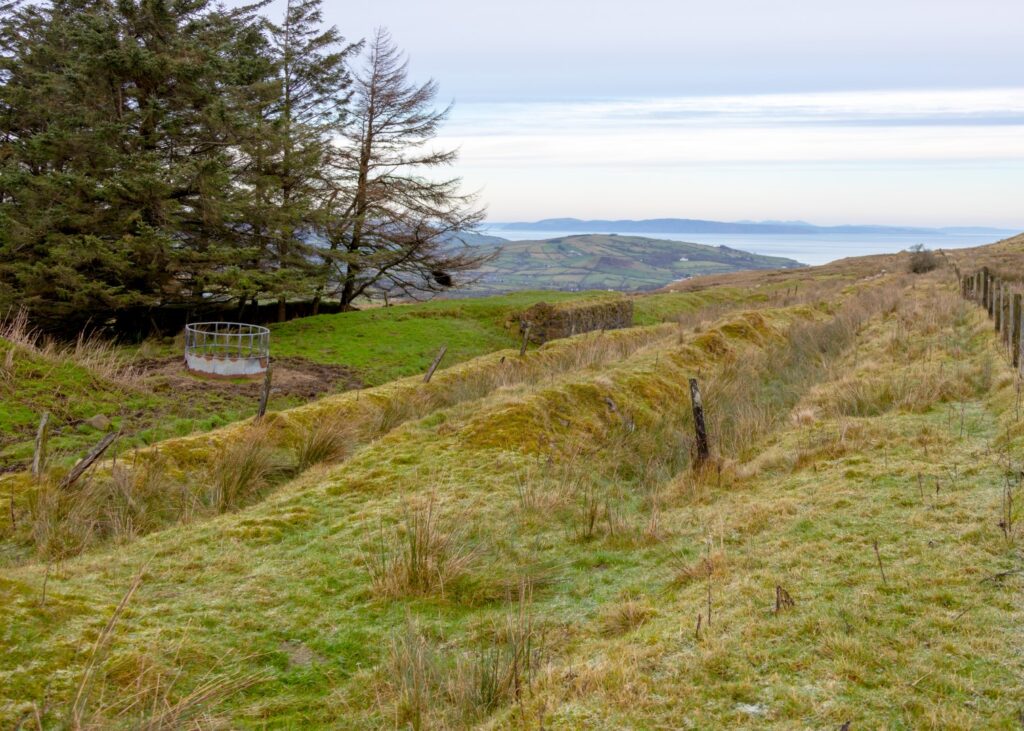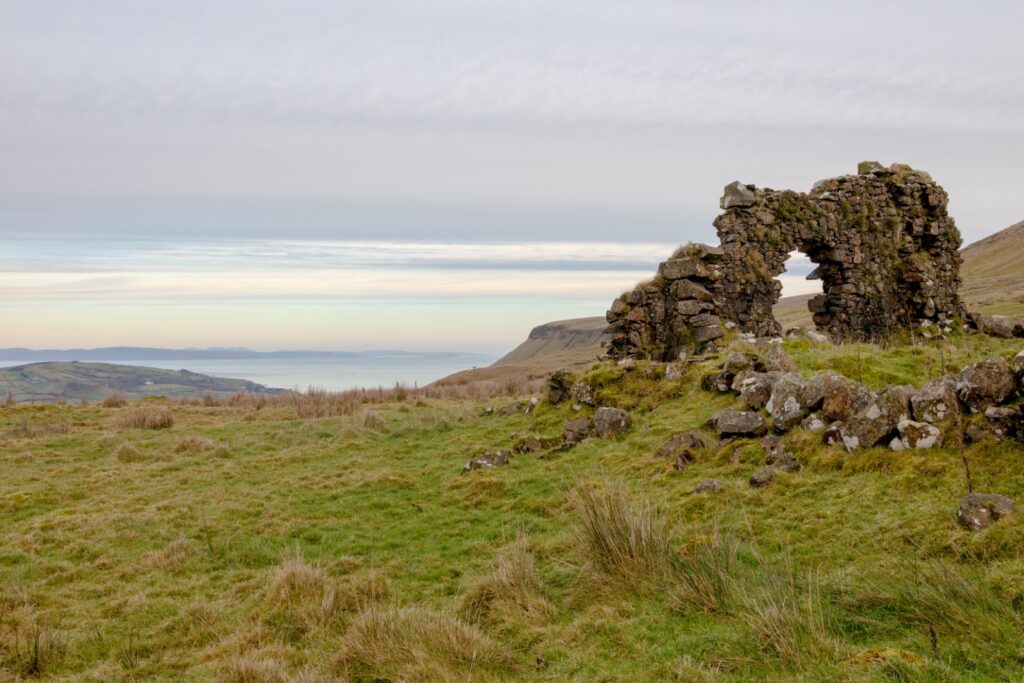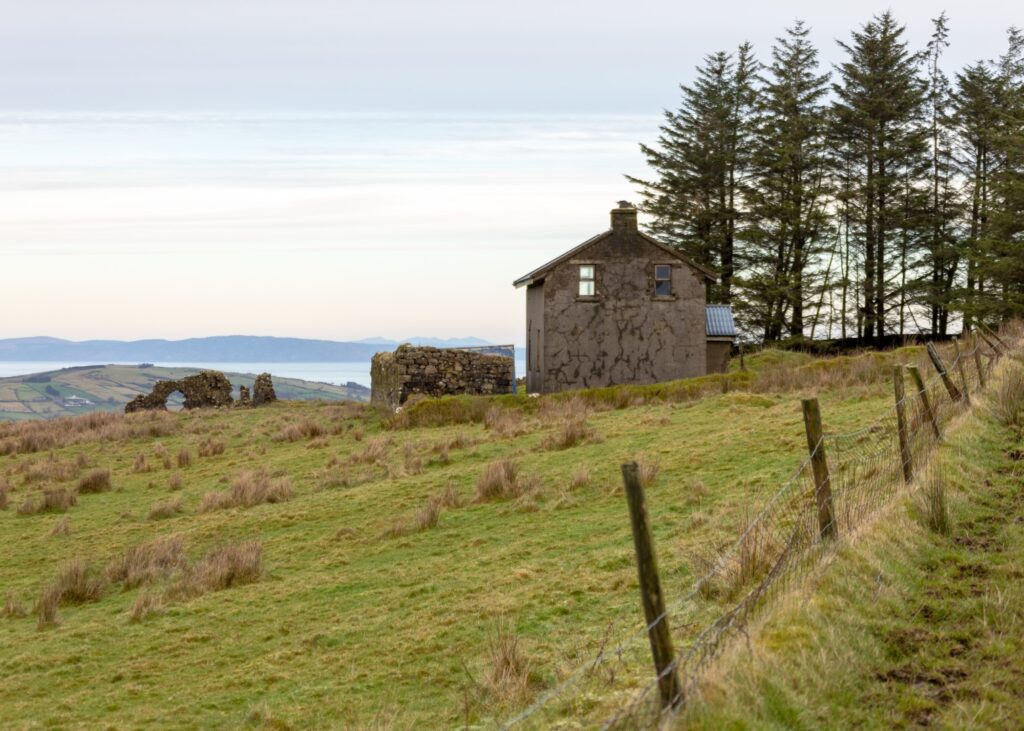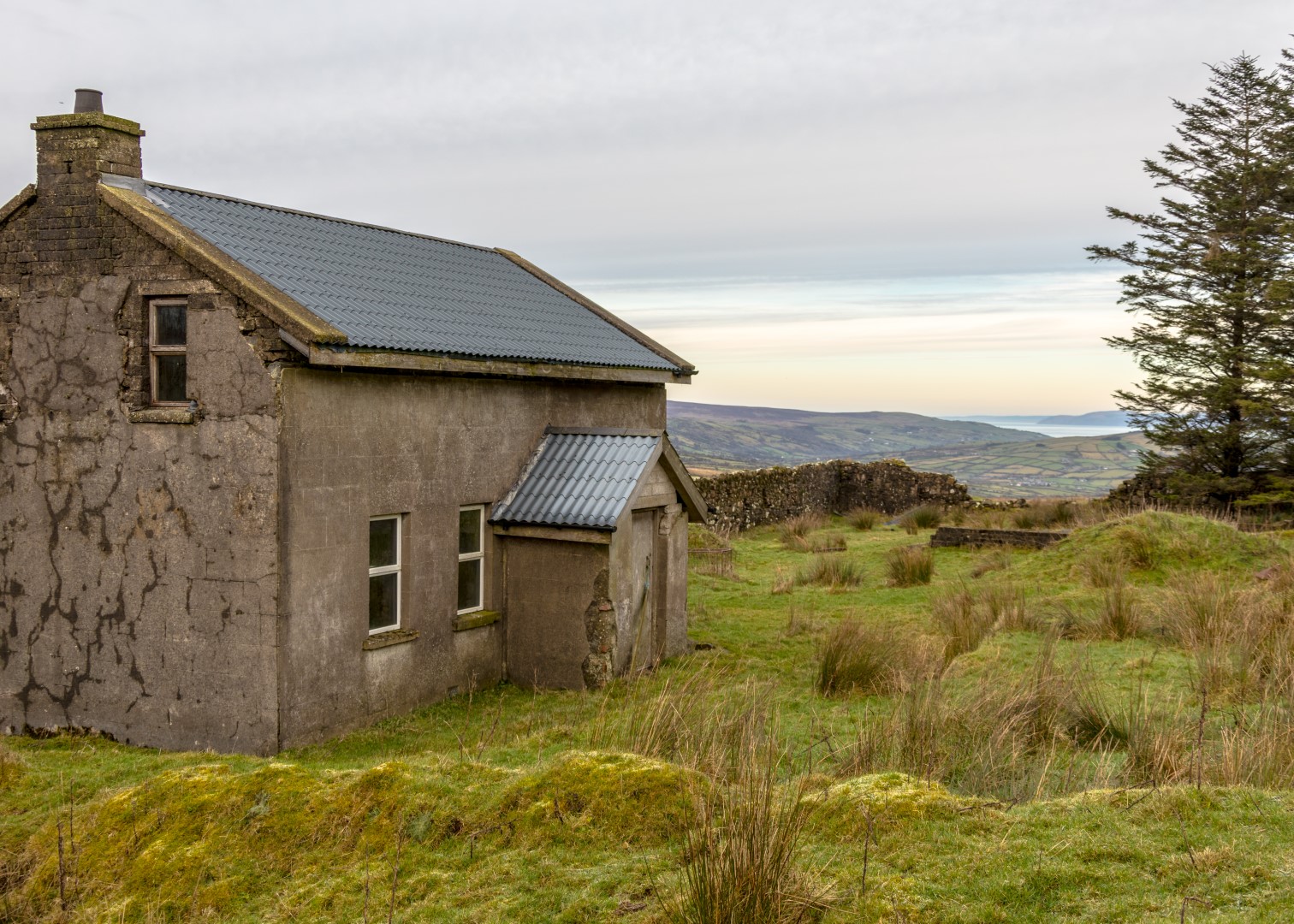
‘Retreat’ was the northern terminus of the Ballymena, Cushendall and Red Bay Railway. Its original purpose was to transport iron ore from the various mines in Glenravel to Ballymena and then to Larne and Belfast for shipment to England. Mining began in 1866 and the railway, Ballymena-Parkmore, began operations in 1875 and on to Retreat a year later. A passenger service began in 1888 to Parkmore but freight only to Retreat. Plans to extend the railway around Lurig to Red Bay were abandoned as the gradient was too steep. Sometimes referred to as ‘Retreat Castle,’ probably arising from a large house built by a Captain George Ewing (late 18th century), whose plans to have tenants grow crops on this beautiful but often bleak hillside quickly failed. Only the outlines of rigs remain as evidence of this failed venture. Ruins of associated buildings are still visible behind the well-preserved station house and there would be some local opinion that the more prominent ruin was a pound or shed to house cattle or store grain in lieu of anticipated rent from tenants.
The name ‘Retreat’ which sometimes supplants the proper name of the townland Cloch glas seems to have arisen around the time of Ewing and maybe he saw it as a gentleman’s retreat from army and or city life. In neighbouring Glenravel Gamble, Crommelin and Benn all tried to establish estates on mountainsides, cases of would-be country gentlemen ‘come lately’ or ‘come too late’ to grab desirable land.
Archaeologists from Queen’s University did an extensive dig here in 2016 and a report on their findings should answer a lot of questions and suppositions about ‘Retreat’.
This post is part of the What’s That? Project. Funded by The Community Arts, Culture and Heritage Fund & The Community Foundation for NI. The aim of the project is to highlight local historical sites and give people a short history of what is there. Photos by John Healy.