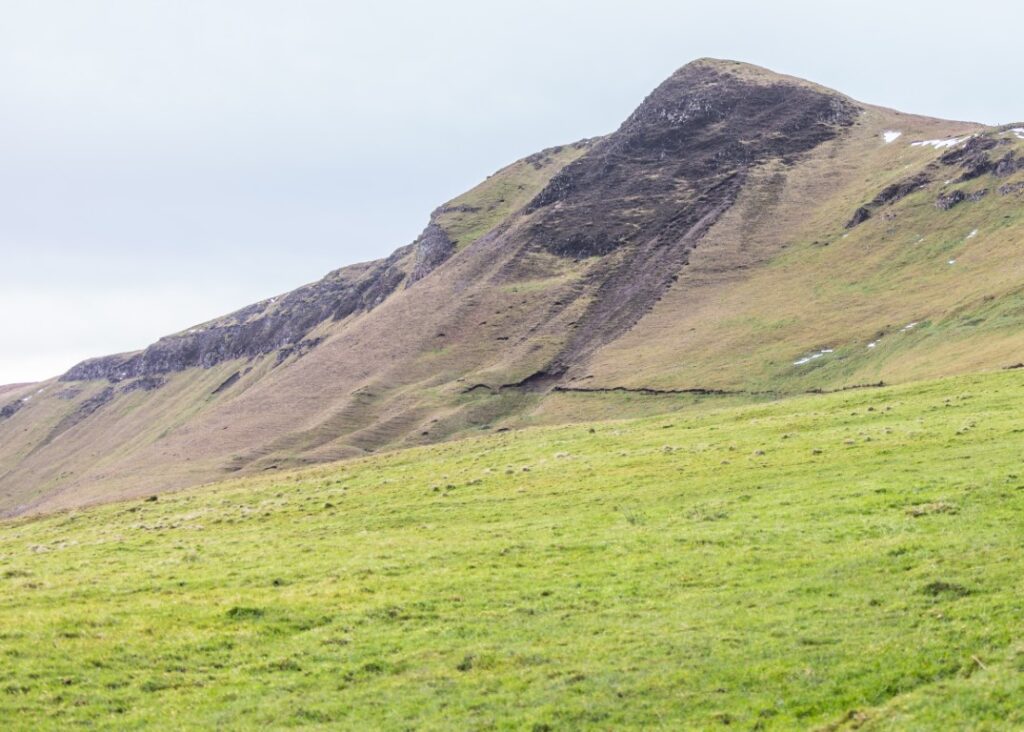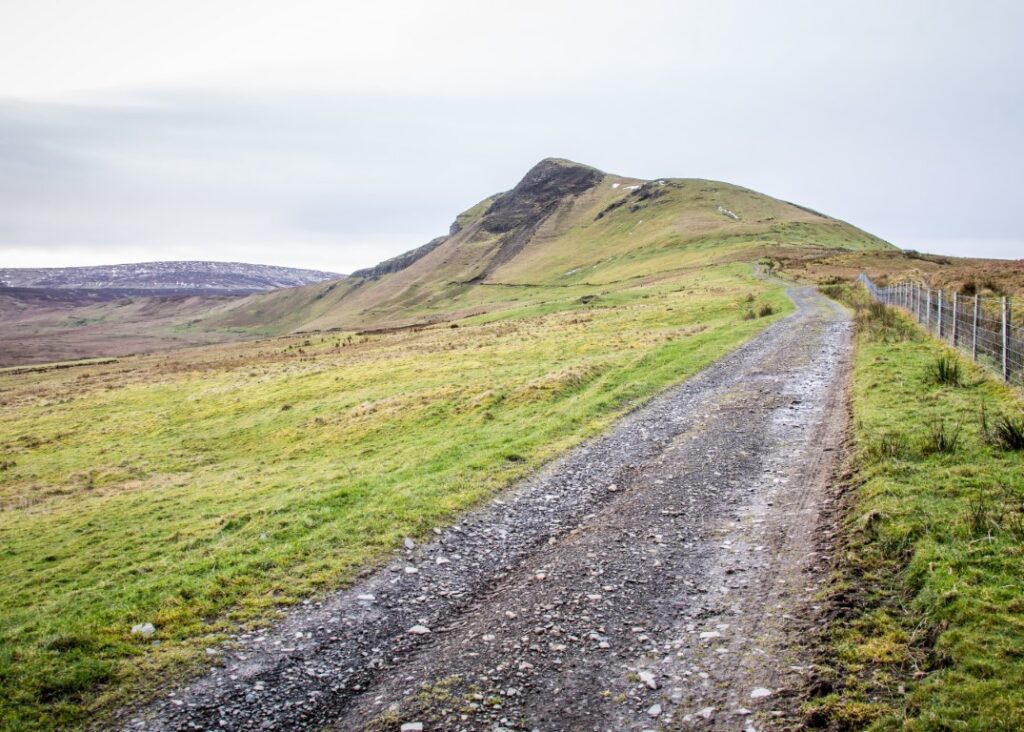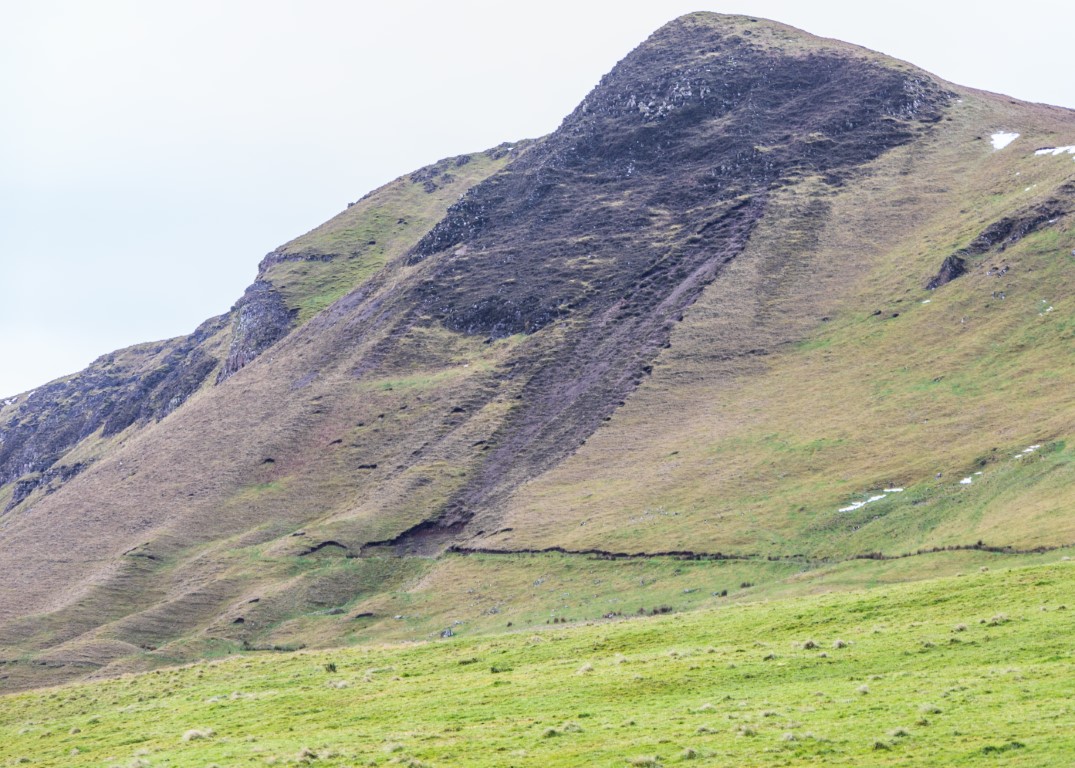
Tievebulliagh (1348ft) A very prominent peak within the middle Glens is usually translated as ‘the hillside of the booleying’ (summer grazing), it is however much more famous for its porcellanite axes.
Our early ancestors (5000BC-3000BC) would have been attracted by the profusion of sharpish edged stones among the scree at the foot of the rock face. At some point they discovered the much harder blue porcellanite high up the face. Excluding an erratic dropped off randomly by glaciers, the only other known source of porcellanite in the British Isles is at Brockley on Rathlin.
Around 10,000 porcellanite polished axes have been found in Ireland and much further afield probably suggesting everyday use rather than symbols of wealth and status as some have suggested’. Another appropriate translation of Tievebulliagh could be ‘hillside of the striking’ (buail – ‘to strike’) as in making stone axes.
This post is part of the What’s That? Project. Funded by The Community Arts, Culture and Heritage Fund & The Community Foundation for NI. The aim of the project is to highlight local historical sites and give people a short history of what is there. Photos by John Healy.